Card Table Wisdom Meets Digital Live Play: Strategy Overlaps for Better Outcomes
Leon Carter · Jul 2, 2026
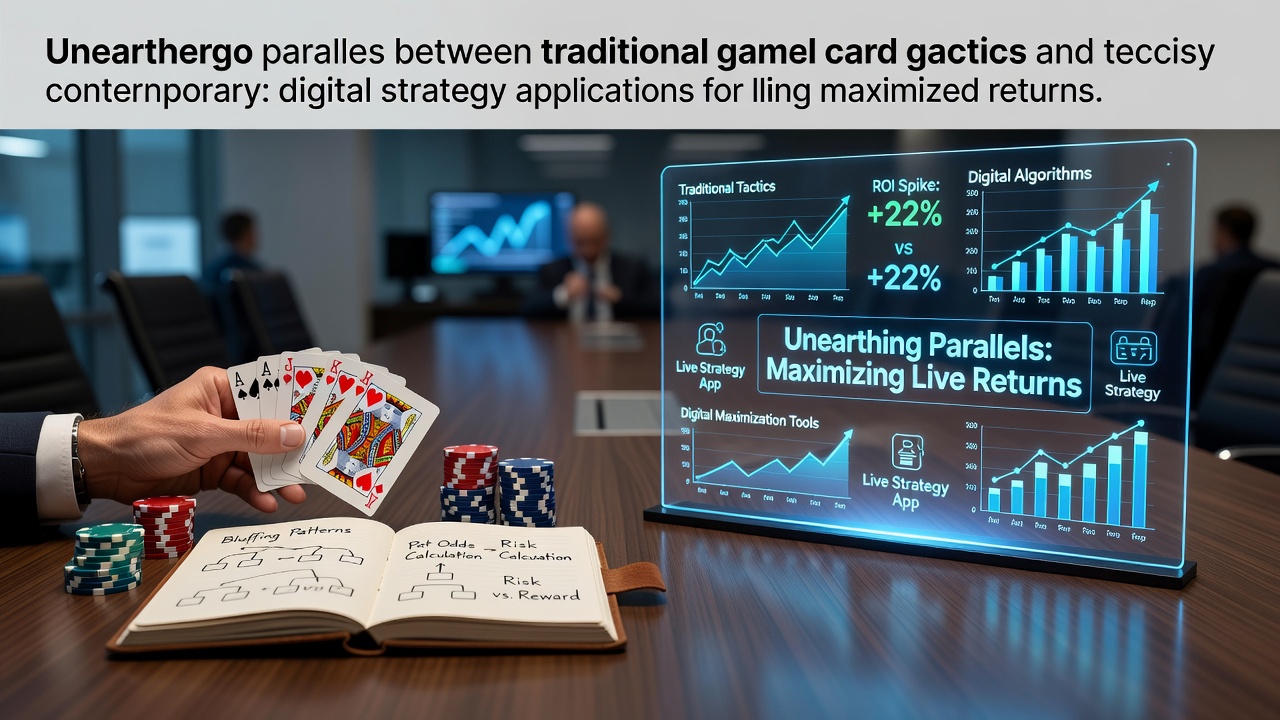
Card Table Wisdom Meets Digital Live Play: Strategy Overlaps for Better Outcomes
Traditional card games such as poker and blackjack have long relied on probability assessment, opponent reading, and disciplined bankroll allocation, and these same elements surface in contemporary digital platforms that host live dealer sessions. Researchers at institutions like the University of Nevada Reno have documented how core decision frameworks from physical tables translate directly into virtual environments where real-time data feeds replace physical cues. Observers note that players who master position awareness in live poker tournaments apply identical spacing logic when selecting seats in digital live blackjack rooms, because both scenarios hinge on information asymmetry and timing.
Foundational Tactics from Physical Card Tables
Blackjack players at brick-and-mortar venues calculate running counts and true counts to adjust bets, while poker participants track betting patterns and fold frequencies across multiple orbits. Data from the Nevada Gaming Control Board shows that structured bankroll division, typically limiting any single hand to one or two percent of total capital, reduces variance exposure over extended sessions. Those who study historical hand records discover that position advantages in seven-card stud mirror the late-position leverage available in digital live poker variants, where action order determines information flow before commitments occur.
Pattern recognition extends beyond counting systems. Experienced participants catalogue dealer tendencies, shuffle irregularities, and table dynamics, then replicate the same observational discipline when digital interfaces supply continuous hand histories and outcome logs. Studies from the University of Las Vegas confirm that memory-based tracking of card distribution improves expected value calculations whether the medium involves physical decks or algorithmic shuffles verified by third-party testing laboratories.
Digital Strategy Tools and Live Environment Integration
Contemporary applications aggregate live session statistics, simulate opponent ranges, and generate real-time probability matrices that echo the mental arithmetic once performed solely at felt tables. Software platforms now deliver overlay data on fold percentages and aggression factors, allowing users to import traditional heuristics such as pot odds evaluation into automated dashboards. According to reports from the American Gaming Association, adoption of these analytical layers has risen steadily as operators expand live dealer offerings across multiple jurisdictions.
Bankroll algorithms embedded in mobile interfaces enforce the same percentage-based allocation rules that veteran players once maintained through manual ledgers. Users set session limits and loss thresholds that mirror physical casino protocols, yet the digital format supplies instant compliance alerts and historical performance graphs. This convergence enables seamless migration of risk-management practices from one setting to another without requiring players to relearn core principles.

Direct Parallels in Decision-Making Processes
Bluff frequency calibration in physical poker carries over to live dealer Texas Hold'em streams, where timing tells replace visible mannerisms and chat box interactions serve as proxy data points. Participants who once adjusted aggression based on stack depths now apply identical adjustments using on-screen metrics that update after each hand. Research published in the Journal of Gambling Studies indicates that players trained in both formats demonstrate consistent improvement in expected value when they transfer position-based betting strategies across environments.
Live roulette and baccarat sessions introduce wheel bias and shoe composition tracking that parallel earlier card-counting methods, and digital overlays now highlight deviation patterns in real time. Operators in regulated markets such as those overseen by the Malta Gaming Authority supply certified random number generators alongside live feeds, so statistical deviations remain measurable. Players who monitor these metrics apply the same selective betting approach once reserved for advantageous physical conditions, thereby maintaining continuity in strategic execution.
Maximizing Returns Through Combined Approaches
Hybrid sessions that alternate between traditional tournament structures and digital live tables allow capital allocation models to operate across both domains simultaneously. Software that exports session data into spreadsheet formats enables detailed review of win-rate trends, mirroring the post-session analysis routines long practiced by professional card players. Figures released by the Canadian Gaming Association reveal that operators integrating such cross-platform analytics report higher player retention when tools emphasize continuity rather than novelty.
Position sizing, once determined by physical chip counts and table image, now incorporates algorithmic suggestions derived from historical performance across thousands of hands. Those who integrate both data sources achieve tighter variance control because the digital layer supplies volume that physical play alone cannot match. External regulatory updates scheduled for July 2026 in several North American markets are expected to standardize data export formats, further easing the transfer of proven tactics between settings.
Conclusion
The migration of established card game principles into digital live environments rests on shared foundations of probability, information management, and disciplined execution rather than on platform-specific innovations. Regulatory bodies across multiple regions continue to verify game integrity through independent testing, which preserves the validity of statistical approaches developed at physical tables. As interfaces evolve, the underlying decision frameworks remain constant, allowing participants to apply familiar methods while accessing expanded data resources that accelerate refinement of existing strategies.